A bed bug is not a hygiene problem. It arrives in luggage, in second-hand furniture, on a coat. And one treatment is almost never the end of it.
This is not a hygiene problem
Bed bugs feed on blood, usually in the hour before dawn, and they are drawn by warmth and carbon dioxide rather than dirt. A clean hotel room and a cluttered bedroom are equally vulnerable.
They arrive in luggage, in the seams of second-hand furniture, on a coat, in a library book.
The stigma attached to them is the main reason people delay reporting an infestation, and that delay is the main reason infestations spread.
They are not known to transmit disease. The sleep loss, the anxiety, and the scratched welts that become infected are real costs, and they are routinely underestimated by people who have not lived with them.
Confirm it before you treat it
Seams of the mattress and the piping around the edge.
The joints of the bed frame.
The gap behind the headboard.
The underside of the box spring.
Sofa seams, curtain folds, and the luggage rack.
Strip the bed and inspect the seams of the mattress, the piping around the edge, the joints of the bed frame, the gap behind the headboard, and the underside of the box spring.
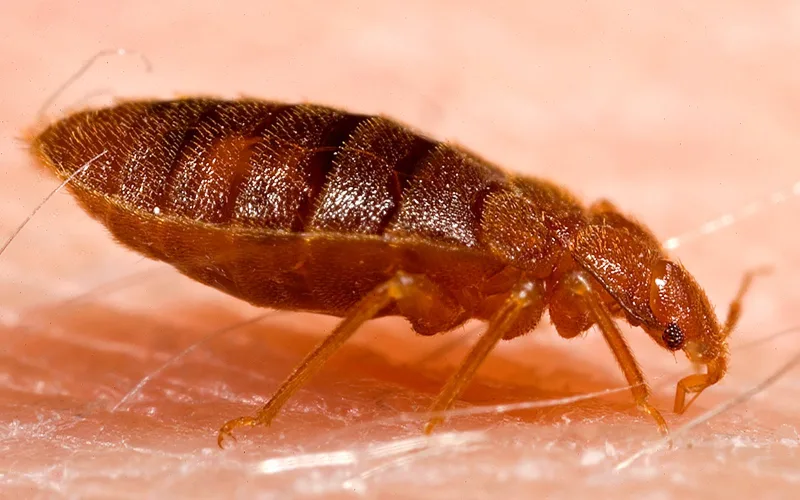
What you are looking for is specific: rust-coloured spots of digested blood, small black dots of faeces that do not smear like dirt, pale shed skins, and live insects about the size and shape of an apple seed.
Check the sofa seams, the curtain folds, and the luggage rack as well. Bed bugs are not confined to beds, and a treatment that only covers the mattress leaves the population in the seating.
If nothing is visible, a passive monitor under each bed leg will confirm or exclude the problem within two weeks without any treatment at all. That is worth doing before you spend money on insecticide.
Why each life stage needs a different approach
The egg is the reason one treatment is never enough.
Eggs are cemented into seams and crevices, they are not affected by most contact insecticides, and they hatch over roughly six to ten days depending on temperature.
Everything you kill on day one leaves the eggs behind, and those nymphs emerge after the residual has already thinned.
Nymphs are small enough to fit into a seam you cannot see and translucent enough to miss. Adults are visible and easier to kill, but they are also the most mobile.
A plan that addresses only the adults produces a clean-looking room and a re-infestation three weeks later.
The treatment sequence that holds
Heat the room and the furniture, or fumigate it. Do not spray the seams.
Wait for the label re-entry time before anyone sleeps there.
Treat the seams of the mattress and the bed frame a second time.
Treat neighbouring rooms and the sofa, which is where they migrate.
Repeat at the hatch interval, because the eggs survive the first round.
First, heat. Wash all bedding and clothing at 60 degrees Celsius and tumble dry on high for at least thirty minutes. The dryer is doing most of the work, and it is the most reliable step in the whole process.
Steam the mattress seams, the frame joints, and the carpet edge. Steam kills eggs that sprays miss, which is why it is not optional.
Second, a labelled residual insecticide applied to cracks, crevices, the bed frame, and the baseboard line. Never to the sleeping surface itself. Follow the label rate. More is not more effective, and it does increase exposure.
Third, plan the second visit. Ten to fourteen days after the first treatment, treat again to catch nymphs that hatched from eggs laid before the first application. Then inspect weekly for eight weeks.
If you stop inspecting at week two, you will not know whether it worked until it is a larger problem.
Three things not to do
Do not use a total-release fogger. The aerosol reaches the air, not the seams, and the disturbance drives bugs into adjacent rooms or units. It converts a contained problem into a building-wide one.
Do not throw out the mattress on day one. Unless it is badly torn, it can be treated and encased. Discarding it often spreads the infestation through the building on the way out.
Do not treat with an unlabelled insecticide because it is what the hardware store had in stock. Resistance to pyrethroids is widespread in bed bugs, and a failed treatment costs more than the correct one did.
Keeping them out next time
In a hotel, put the suitcase on the rack rather than the floor or the bed, and check the mattress seams before unpacking. On returning home, launder everything that was in the case.
Inspect second-hand furniture outdoors, in daylight, before it enters the house. None of this is foolproof, but it lowers the odds considerably, and it costs nothing.
Photo: CDC / Harvard University, public domain, via Wikimedia Commons.