A colony is one animal spread across many bodies, and the trail on your worktop is how the bodies talk to each other.
The scout, the road, the crowd
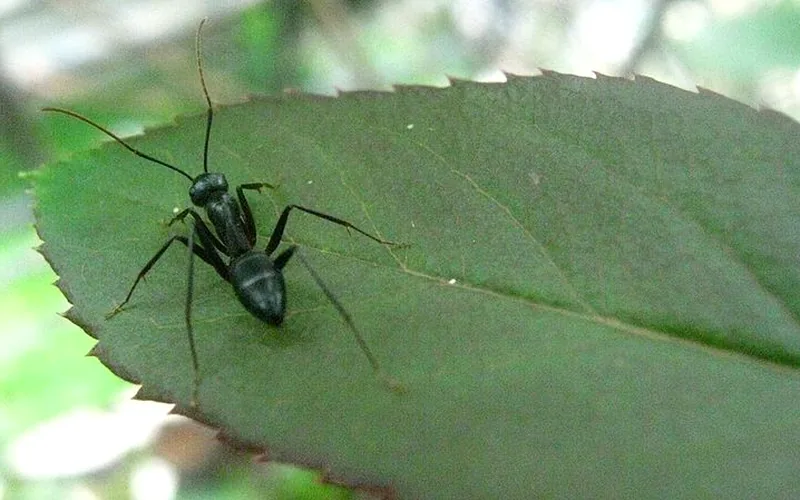
A foraging ant leaves the nest alone. When it finds food it eats, then walks home dragging its abdomen on the surface, laying a trail of pheromone.
The next ants follow that scent, reach the food, and reinforce the trail on their own way back. Within an hour a thin line becomes a busy road.
Two smells, two directions
The trail is not one chemical. Returning ants lay a slightly different blend from the ones heading out, so a forager can tell which way the food lies.
The whole system is short-lived by design. Pheromone evaporates, so a trail that stops being used fades within hours. That is why a line on the worktop one evening can be somewhere else the next.
Why wiping it down is only half a fix
Cleaning the surface removes the road, and the ants stop for a while. But the colony is still in the wall, under the floor, or behind the cabinet. It sends new scouts, and a new road appears.
That is not a failure of cleaning. It is just that the problem is not on the worktop.
Why bait takes days
A bait works because foragers carry it home and pass it to the rest of the colony, a behaviour called trophallaxis. The active ingredient is dosed to be slow enough for that journey to happen.
So the correct expectation is this: activity may increase for a few days, then fall away over one to three weeks. A bait that killed instantly would only kill the couriers.
Where the line goes matters
Follow the trail instead of interrupting it. The point where it disappears into a gap tells you where the nest is, and that is the information worth having.
It also tells you what kind of ant you have. Small, fast, pale yellow ants indoors are often Pharaoh ants, and those should never be sprayed: disturbing them makes the colony split into several new ones.
One last detail that surprises people: most of the ants you see are sterile female workers. The colony has one or more queens, and they never leave the nest.
Photo: Nahushraj, CC BY-SA 4.0, via Wikimedia Commons.