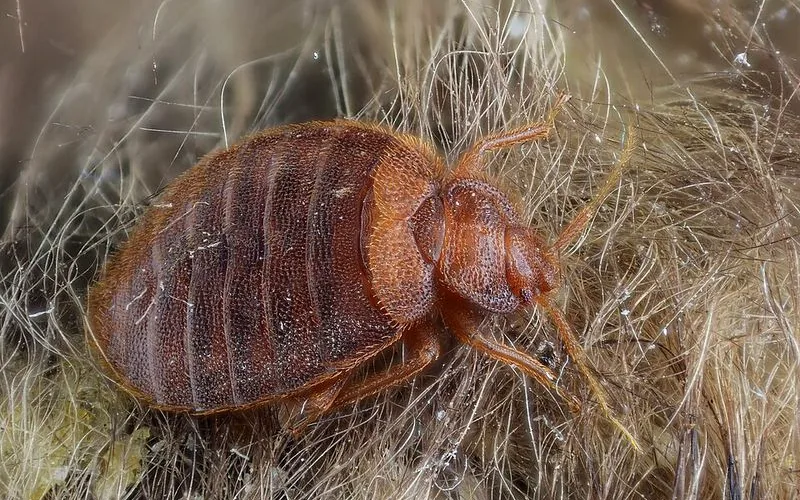
A bed bug spends most of its life folded into a gap about as thick as a credit card, and it rarely travels further than it has to.
A night animal with a short commute
Bed bugs come out in the dark, feed for five to ten minutes, and retreat. They are not wanderers. They follow the carbon dioxide and warmth of a sleeping person, then return to the same crack.
That habit is the reason an inspection is a search of edges, not a look at the middle of a mattress.
The two metre rule
In a normal infestation, the hiding places are within one to two metres of the bed. In a heavy one, they spread to bedside drawers, skirting boards, curtains, sockets, picture frames and the seams of a sofa in the next room.
Where to look, in order
The piping and seams of the mattress, and the label.
The corners and seams of a box spring or bed base.
Joints in a wooden frame, and the gap behind the headboard.
The top edge of the skirting board, and the gap under it.
Curtain hems, and the runner of a bedside drawer.
What you are looking for is small: dark rust-coloured spots, black specks, pale shed skins, and live insects the size and shape of an apple seed.
Why cleanliness does not protect you
Bed bugs do not feed on crumbs or waste. They arrive, usually on a suitcase, a coat, a piece of second-hand furniture, or in the seams of a laundry bag.
A spotless flat can be infested in a week. A cluttered one is simply harder to inspect, which is the only reason clutter matters.
Why they are hard to starve out
An adult bed bug can survive several months without feeding, and a nymph less. Leaving a room empty for a fortnight does not solve anything.
They also hide in places that are awkward to treat: inside a socket, behind a skirting board, in the folded seam of a mattress.
What actually works
Heat. Every life stage, eggs included, dies above roughly 45 degrees Celsius if the temperature is held long enough. That is why a professional treatment heats a room rather than only spraying surfaces.
Washing bedding at 60 degrees and drying on a hot cycle deals with what is on the fabric. It does not deal with the frame.
And one expectation to set: bites appear in lines or small clusters, but not everyone reacts at all. Two people in the same bed can have completely different skin.