Adulticide feels effective because you can see the fog. But if the larvae are still in the birdbath, the next brood arrives in a week.
What is actually at stake
Beyond the itch, mosquitoes are vectors. West Nile virus is established across the United States, and in warmer regions dengue and Zika are a live concern.
A single neglected container, a plant saucer, a blocked gutter, a fold in a tarpaulin, a bucket behind the shed, can produce hundreds of adults in under two weeks. The adults from that container will be the ones biting you in your own yard.
Work in the right order, or waste the money
Step one: remove the water where larvae live.
Step two: treat the water that cannot be removed.
Step three: knock down the adults that are already flying.
Step four: protect yourself in the meantime.
The sequence is source reduction, then larvicide, then adulticide. Doing it in any other order is spending money on the visible stage while the next generation develops out of sight.
Source reduction means emptying and scrubbing every container that holds water, once a week. Scrubbing matters.
Mosquito eggs are cemented to the sides above the waterline and survive drying out for months, so emptying without scrubbing leaves the next brood in place, waiting for the next rain.
The two places people forget are the roof gutter and the irrigation system.
A gutter that does not drain holds a thin film of water along its whole length, which is enough for a brood, and it is invisible from the ground.
Drip lines and sprinkler heads left pressurised hold water in the fittings. Flush the gutters before the season starts and drain the lines after each use.
Larvicide is the highest-leverage step
For water you cannot empty, a rain barrel, a birdbath, a drainage sump, a pond, a Bti granule (Bacillus thuringiensis israelensis) kills the larvae and very little else.
It is specific to the larval gut, it has no effect on fish, birds, or mammals, and it does not select for resistance the way a chemical larvicide can.
One treatment holds for roughly two to three weeks depending on the formulation and the water turnover.
This is the step most homeowners skip, and it is the one that stops the next brood. Fogging an adult population while larvae are still developing is a treadmill.
Adulticide: where and when, not how much
A residual spray applied to resting surfaces keeps working for weeks, because mosquitoes rest there during the day. Shaded foliage, the underside of a deck, the north-facing wall, the fence line.
A fog only touches what is flying at the moment of application and leaves no residue, so for a yard the residual application does more work per dollar.
Apply at dawn or dusk, when the insects are active and the pollinators are not. Avoid flowering plants entirely.
Most adulticides are highly toxic to bees, and a garden sprayed in bloom is a garden with no bees for a month.
What does not work
Ultrasonic repellents have been tested repeatedly and do not reduce biting. Bug zappers kill far more beneficial insects than mosquitoes, and most of what they kill are non-biting males.
Citronella candles reduce bites only inside the plume of smoke. Vitamin B patches have no supporting evidence. Each of these costs money that would be better spent on a season of larvicide.
The personal layer
Long sleeves at dusk, repaired screens, and an EPA-registered repellent on exposed skin. A fan on the patio helps more than people expect, because mosquitoes are weak fliers. Water in a pet bowl should be changed daily, not weekly.
It does not stop at your fence
A mosquito programme that ends at the property line rarely holds.
A neighbour abandoned pool, a shared drainage ditch, or a construction site with standing water will keep producing adults that do not respect boundaries.
In a dense neighbourhood the most effective single action is usually a conversation, not a purchase.
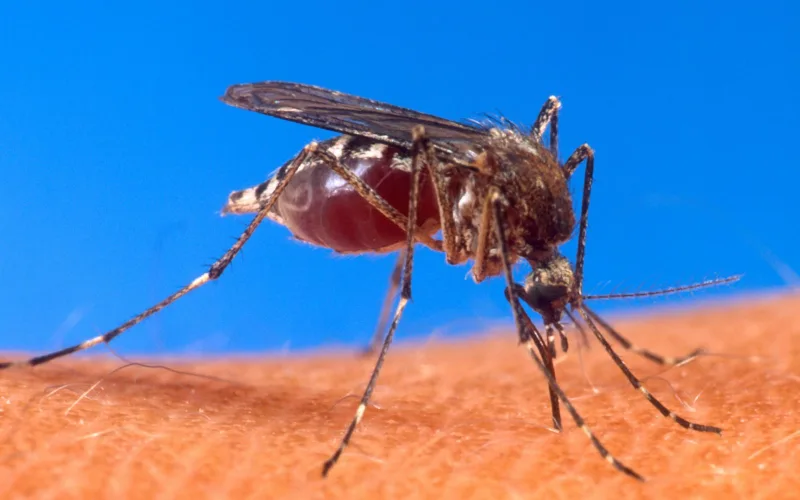
Photo: US Department of Agriculture, public domain, via Wikimedia Commons.